Managing an Event Management Company
Introduction
Running an established Event Management Company (EMC) for managing events, activations or intellectual properties, is a fulfilling job in terms of both appreciation and profits. Some EMC owners assume that not much management is required in a small business company. But contrary to the common belief, event companies must be organized and systemized to ensure efficient and profitable operations. The entrepreneur also needs to be a quick thinker in case of unforeseen emergencies such as firefighting, crowd control and so on.
Various departments in the organizations, if organized properly, ensure smooth operations without much micromanagement. Challenges faced by these departments are often associated with the stage of the organization’s life cycle. This Unit will cover the life cycle of an organization. It will also cover various aspects of management, including, Production and Operations Management, Marketing Management, Human Resource Management, Total Quality Management and Business Ethics.
Life Cycle of an Organization
Any organization, including an event company, undergoes changes in its conceptual and structural dimensions over a period of time which presents challenges to the entrepreneur. An entrepreneur will be able to better understand these changes if s/he has the knowledge of the five stages of the Organization’s Life Cycle. Each stage has its own conceptual variations, and they result in observable change in the structure and vision of the company. For better understanding, the stages of organizational life cycle have been explained below:
STAGE 1: Entrepreneurial Stage: This is the conceptual stage, where the entrepreneur finalizes her / his business idea, designs the business plan, raises capitals and starts her / his business. Success at this stage depends on the ability of the entrepreneur to identify the right business opportunity, followed by accuracy of the market research, uniqueness of the idea, explicitly identified services, properly estimated budget and financial projections. The entrepreneur must attempt to create a niche market for her / his EMC.
STAGE 2: Expansion / Growth Phase: As the business expands, the EMC generates more revenue, services are developed, workforce is hired and so on. More business opportunities are capitalized at this stage, often resulting in radical increase in personnel strength and resources. At this stage, an organization is geared towards maximizing its services and sales capacity.
STAGE 3: Consolidation: During the consolidation stage, the event company establishes its market presence and the focus shifts to cost control, productivity and profit. Often in spite of sizable market share and a strong financial base organization experience stagnation. This stage is marked by stability, and by a slight slowdown. To avoid the decline of the organization at this stage, various actions are undertaken to renew its growth, including introduction of new services. This stage is also referred as the Diversification Stage.
STAGE 4: Decline: An organization enters the decline phase when it experiences continuous reduction in resources and revenue over a long period of time. This decline can occur after any growth stage, not necessarily after consolidation stage. But it is often too late to recover from it as early signs are often mistaken to be ‘temporary.’ In this stage, it’s not just sales and profits that drop, but company hiring drops too. Furthermore, demand for company’s products or services decreases. However, there could be times when the decline is temporary, and the consolidation / cutback measures to realign and revitalize the organization may revive the organization’s growth. Hence, this could be a temporary decline period, followed by another phase of growth.
Successful ventures do not experience the Decline stage in their organization’s life cycle. In other words, a successful EMC will consolidate and then continue to grow in terms of sales and profits.
Production and Operations Management
An EMC caters to the needs of the customer by providing services and in the process creates value for customers by organizing successful events. Production and Operations Management are the actual micro components of day-to-day operations of an event company.
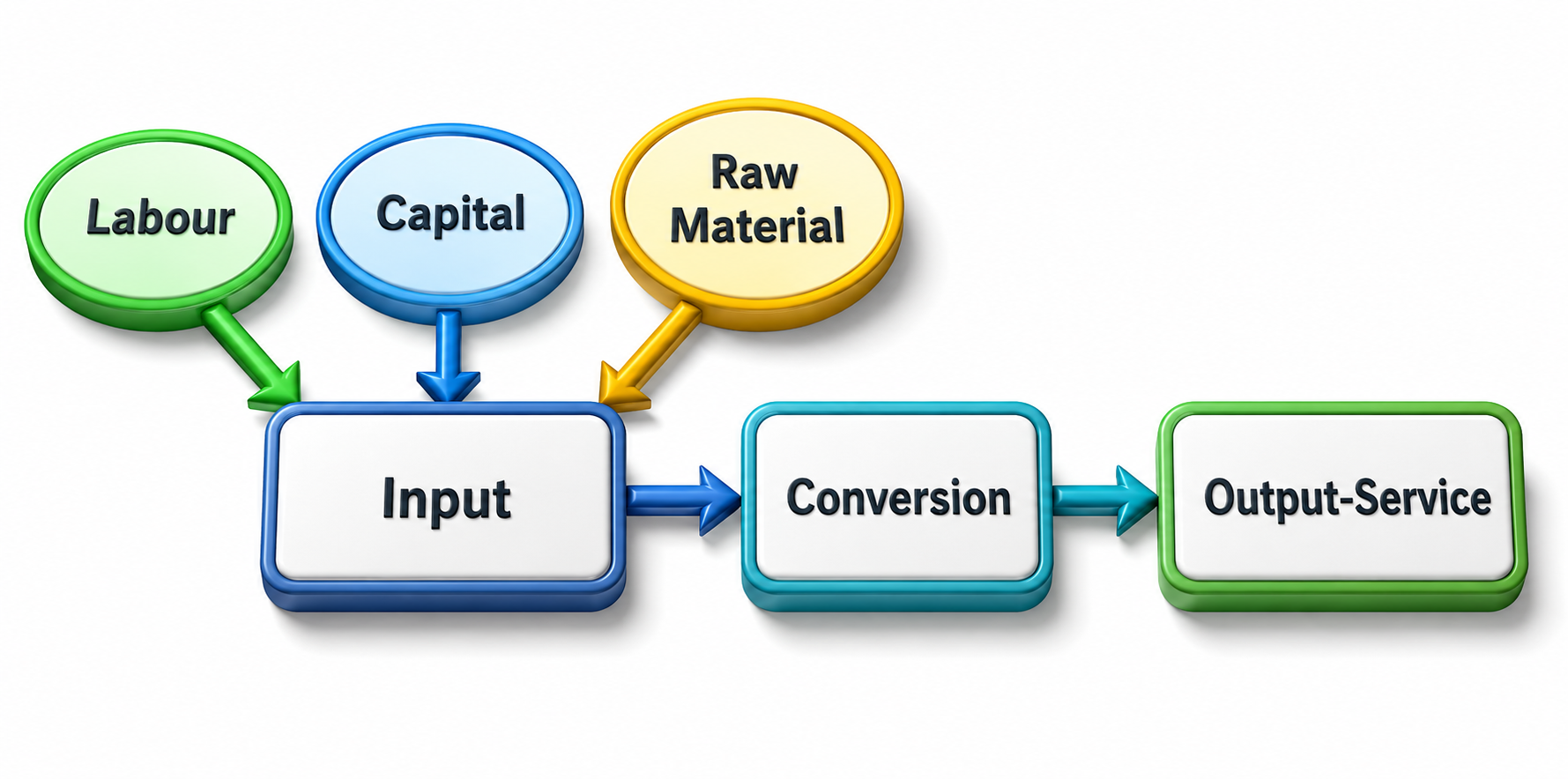
Production: Production is a process of transforming raw materials (input) into the desired service (output) by adding economic value. It requires effective planning and controlling of all parameters of production to achieve the desired results, thereby, creating value for the customers. The steps involved in the production technique in the event industry are shown below.
Operations Management: To organize satisfactory events for customers, it is essential for an event company to do the following:
- Identify customer needs to provide desired services.
- Prepare the list of required raw materials after customers’ need assessment.
- Engage internal and external vendors to a create supply chain for raw material and finished goods between vendor, production facility, and customers.
For example, if the State Government gives your event company a contract to organize National Games in the state, you must first understand the details of the event including type of games or events, services required during the events, essential sports equipment, etc. This would help you ascertain the raw material requirement and identify relevant vendors to supply raw material and for project implementation.
Marketing Management
A person who sells goods and services in lieu of payment is known as a Seller, and a person who purchases these goods or services is a Buyer. A set up in which two or more parties are involved in the process of buying and selling is called a market.
According to Kotler marketing is “satisfying the needs and wants through an exchange process.” It is very important to have a competitive market system with multiple buyers and sellers to enable better and advanced quality of the various event services.
It is the duty of a seller (service provider) to give complete and correct information to the consumers about their services. To ensure high sales it is important to clearly communicate USPs (Unique Selling Propositions) of the brand. These are the unique features of the brand or service that fulfill the needs of the buyer. Having multiple buyers means different preferences and requirements. To deal with this, the concept of STP was developed:
- S-Segmentation
- T-Targeting
- P-Positioning
Marketing segmentation refers to grouping (into segments) of customers having similar demands and preferences. For example, males and females have different requirements and are hence divided into different segments. Some customers may be segregated into segments on the basis of their economic status, or social and cultural factors.
After market segmentation, the event manager selects one or more of these segments based on attractiveness of the segment and other considerations. Developing marketing strategies and promotional plans in accordance with identified market segments and services offered by the company is termed as targeting. For example, the Trade Fair fulfils the needs and expectations of all the segments, whether individuals, or business houses.
Once the event manager completes the process of targeting, the process of positioning starts. Positioning is the process of establishing and communicating the key benefits of the event to the market. You need to check if the choice of the event was appropriate and whether it was positioned correctly with respect to the service offered by the competitors. Positioning of the event creates a perception of fulfilling a particular need of the target segment.
Marketing Mix
Marketing Mix is the combination of several concepts and ideas to formulate final strategies helpful in making a brand or service popular or promote it amongst the masses. To understand basic marketing mix, generally the following four Ps are used:
Product / Services: Goods or services produced by organizations and thereafter used by the customers are referred to as products / services. It is sold by the seller to the buyer in return for money. There are two types of products: Tangible and Intangible. An event company is an example of intangible service as no physical product is exchanged, but service (i.e. event experience) is sold. These services may include entertainment, interactions, catering services and the ‘brand image’ of the event in the target market.
Price: Money paid by a buyer to purchase a service is the Price of that service. When there is greater availability of a service / product in a market, its price falls and visa-versa. Pricing also depends upon the number of people attending the event and the selected venue. Pricing may also depend on the type of customer (e.g. senior citizen) and the time of the event (e.g. discounted price in festival season). Critical factors associated with pricing are:
- Determination of market share planned to be captured.
- Formulation of pricing strategy.
- Estimation of existing potential demand.
- Evaluation of likely response of the competitors.
Place: The site where products / services are sold is known as place. Products / services are sold both physically in markets and online. A mix of both is convenient for the buyers and likely to increase the sale. The factors to be considered while selecting a suitable location for a business are:
- Located to serve the customer (demographic trends)
- Cost of the location (rent or purchase price)
- Quantity and quality of labor supply
- Zoning restrictions
- General business climate
- Transportation – For customers (highways, public transportation etc.) and raw materials (rail, air etc.)
- Proximity to raw material.
- Quality of public services
- Taxes (if owning)
- Adequacy of future expansion
- Value of site in future
- Labor cost and anticipated productivity
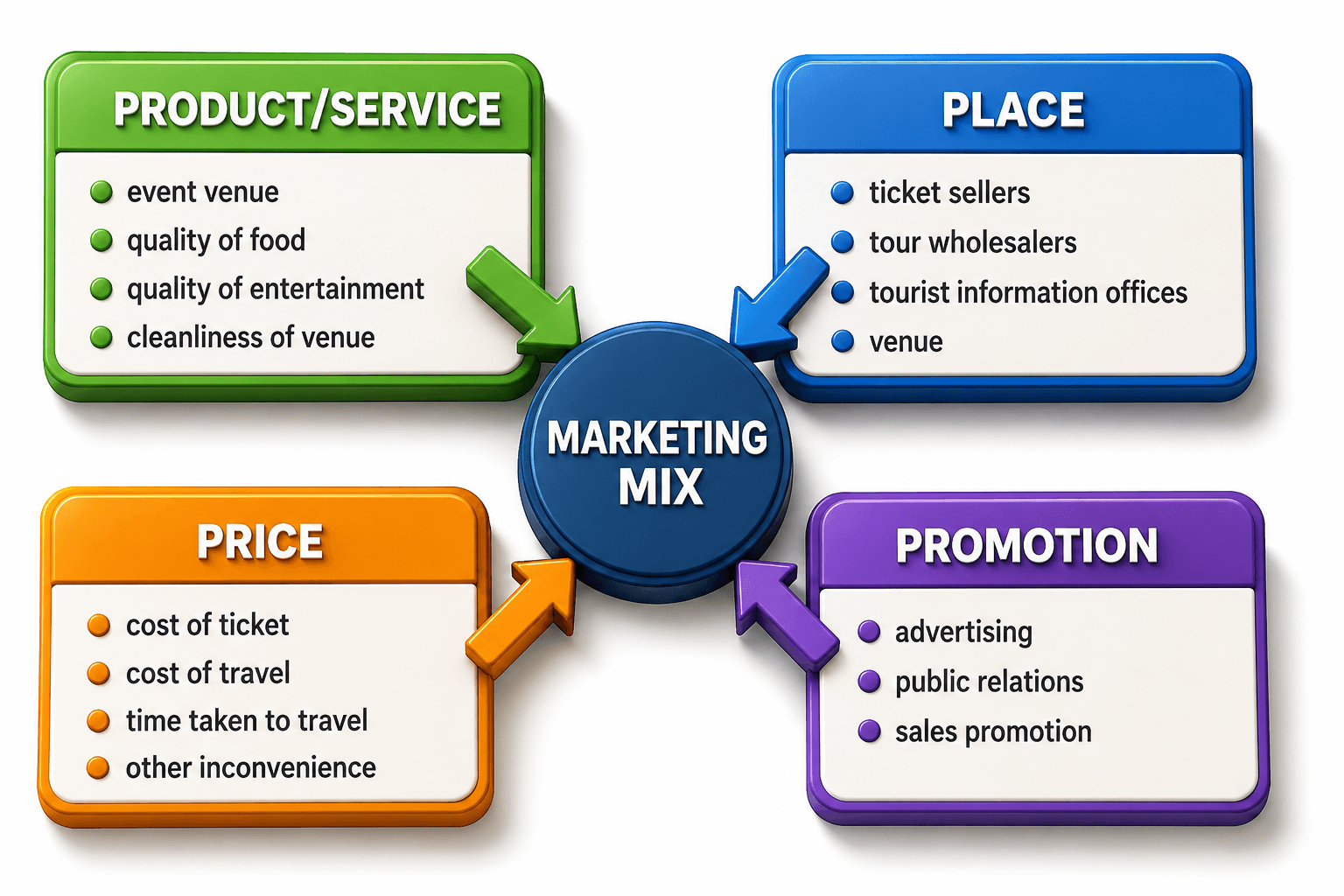
Promotion: According to Middleton, promotion is the most visible of the four Ps of the marketing mix. Popularizing a service through advertisements in TV, papers, radio, word-of-mouth, sales promotion, merchandising, publicity and public relations, direct mail, internet usage, etc. is called promotion. These promotion strategies attract customers to use the services being offered by the company. The steps involved in promoting a product / service are given below.
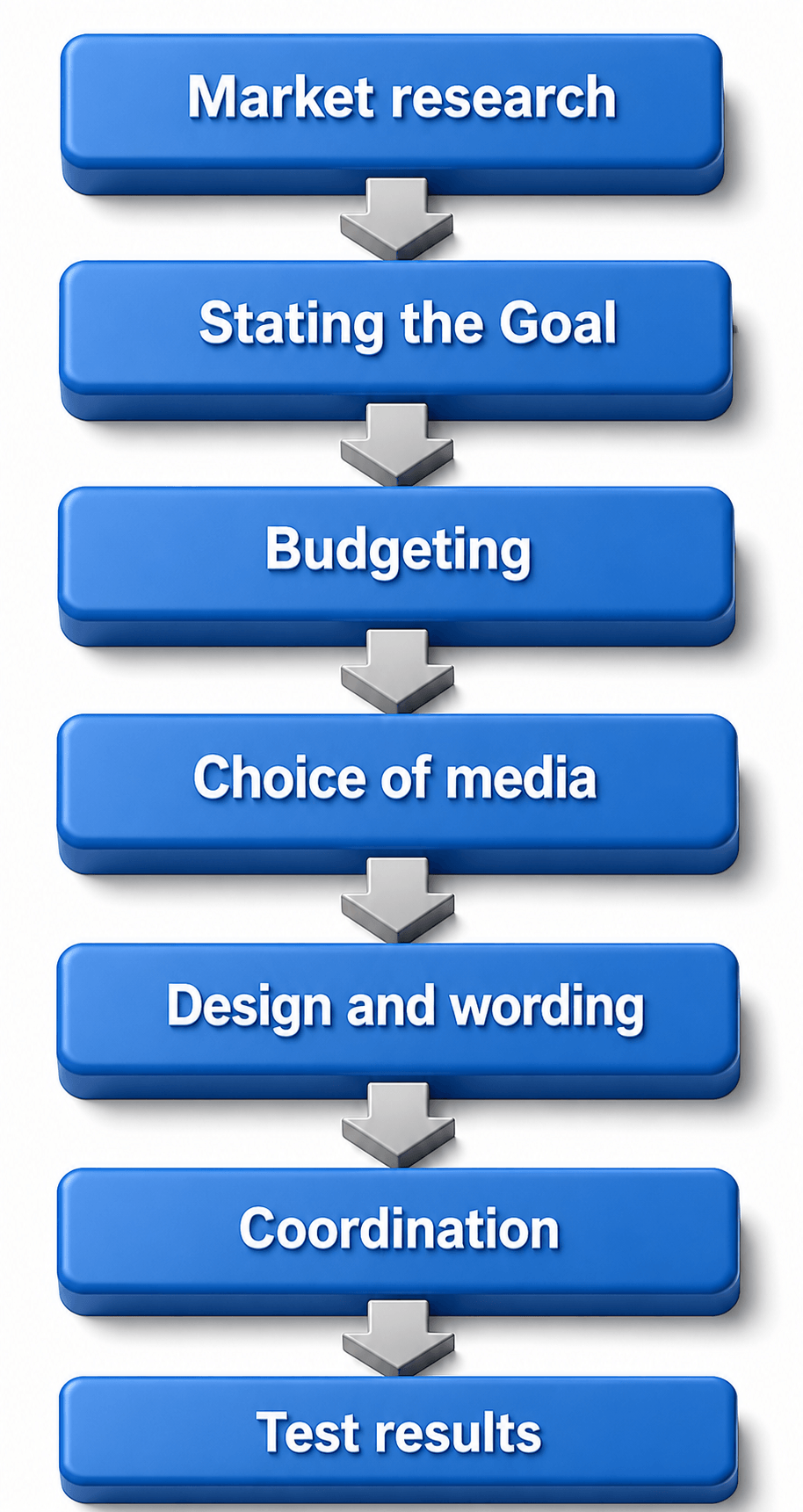
The promotion strategy should be designed to attract the attention of potential customers so that they are motivated to pay for the experience.
Every event company should try to create a combination of all the 4Ps in a way that it results in highest level of satisfaction for the consumer and simultaneously achieve organization’s objectives. The mix of 4Ps is assembled according to the requirements of the target market and availability of organization’s resources and market objectives.
The fifth P, that has gained and still gaining popularity as a concept, is ‘Pace’. This signifies the speed and efficiency at which the product or service is delivered to the customer. Variations on the original 4Ps has been given by Getz who suggested an eight-P mix of the following that supplements the 4Ps for event management:
- Product (the service offered)
- Place (the location)
- Programming (elements and quality of style)
- People (cast, audience, hosts and guests)
- Partnerships (stakeholders in producing the event)
- Promotion (marketing communications)
- Packaging and distribution of tickets
- Price
Further variations in Ps have been given by researchers and experts in event management.
The Five Cs of Events
According to Gaur and Saggere, marketing and managing of events involve the use of the following five Cs:
- Conceptualization – of the creative ideas to create the desired ambience.
- Costing – involves calculation of production cost and safety margins
- Canvassing – for clients / sponsors, target audience/ customers, followed by networking
- Customization of the event concept – the concept is customized based on customers’ needs, marketing objectives, according to brand personality, budgets etc.
- Carrying-out – is the execution of the event according to the final concept
The five Cs described above, though linked to each other, may not follow the above sequence. This is due to a complex interaction between the five Cs before the carry out stage. During the conceptualization phase, the initial concept (including costing, canvassing, and customization) undergoes several modifications before finalizing the concept. This process is called Event Designing.
Marketing a Service-based Company – Key Success Factors
- Clearly articulated Positioning Strategy: After finalizing the positioning strategy it is necessary to convey the same to the employees and customers.
- Emphasis on Quality: To develop to the needs and specification of users and ensuring its best quality, both at the time of making as well as execution.
- Customer Retention: It is always beneficial for the events business to retain existing customers along with making new ones.
- Collecting and using Customer Data: Most service firms collect necessary customer data / information for operations and accounting. For example, EMCs collect information about the audience via purchased tickets and registration forms. EMCs can also buy data from agencies which have customer data base, such as telecom companies and other service providers. This data can range from demographics to income groups and cultural affiliations. These data bases are potential marketing gold mines.
- Close relations between Marketing, Operations and Human Resources: Proper integration and coordination between these functions is the key to success.
- Soliciting feedback from Customers and Employees: Feedback from customers helps evaluate the event including its positives and areas that require improvement.
- Top Management Commitment: Top management is the main decision-making body in any company and affects all the employees from senior level to entry level. Management ensures that the operations of the organization are in line with its vision. They also have a direct influence on the culture and success of the organization.
Human Resource Management
According to Dessler, Human Resource Management (HRM) is the process of acquiring, training, appraising, and compensating employees, and of attending to their labor relations, health and safety, and fairness concerns. Human Resource Development or HRD is a sub-field under HRM. Human Resource Development is the process of enabling and empowering human resources in an organization. Following components are covered under HRD:
Manpower Planning: In small scale sector, manpower planning is usually a one-man show or a group decision for allocation of responsibilities to the personnel. Usually, EMCs determine the manpower requirement for specific positions and assign roles to each employee after careful analysis of their policies and goals. Often EMCs hire HRM consultants to ensure right manpower planning for the organization.
Recruitment, Selection and Placement: Recruitment is the process of searching for adequate number of applicants for the job. The process of recruitment must begin with a clear specification or understanding of manpower needs. Applicants could be identified through public or private employment exchanges, training institutes or polytechnic colleges, newspaper advertisements, trade union and trade or professional associations. During the recruitment process, the HR manager prepares the job description and job specification for the vacant post. Job description is the formal description of employees’ responsibilities, while job specification lists the education, training, experience and other skill sets required by the incumbent to perform the job successfully.
Selection is a process of gathering information for the purpose of evaluating and finalizing the candidate for short and long-term appointment as desired by the candidate and the organization. Selection techniques include – assessing the past behavior to predict future behavior; identifying of critical job requirements; using effective interviewing techniques; and supplementing interview information. For example, the performance of a candidate for the post of sponsorship manager can be assessed by asking him to present a sponsorship proposal. Organizations also use previous employers as referees to verify the candidate’s credibility and performance.
Placement refers to assigning rank and responsibility to the selected candidate. Event managers may also hire volunteers or contract staff for events. For this, they should identify the range of jobs and tasks required for an event and mobilize volunteers from universities and colleges that offer courses on event management or related programs, charitable organizations, interested voluntary bodies, alumini groups, professional organizations etc. It is generally assumed that volunteers are individuals, but for large scale events, voluntary bodies willing to participate could be identified. There are no unique set rules for recruitment, selection and placement of employees. However, it is recommended that the following steps be followed:
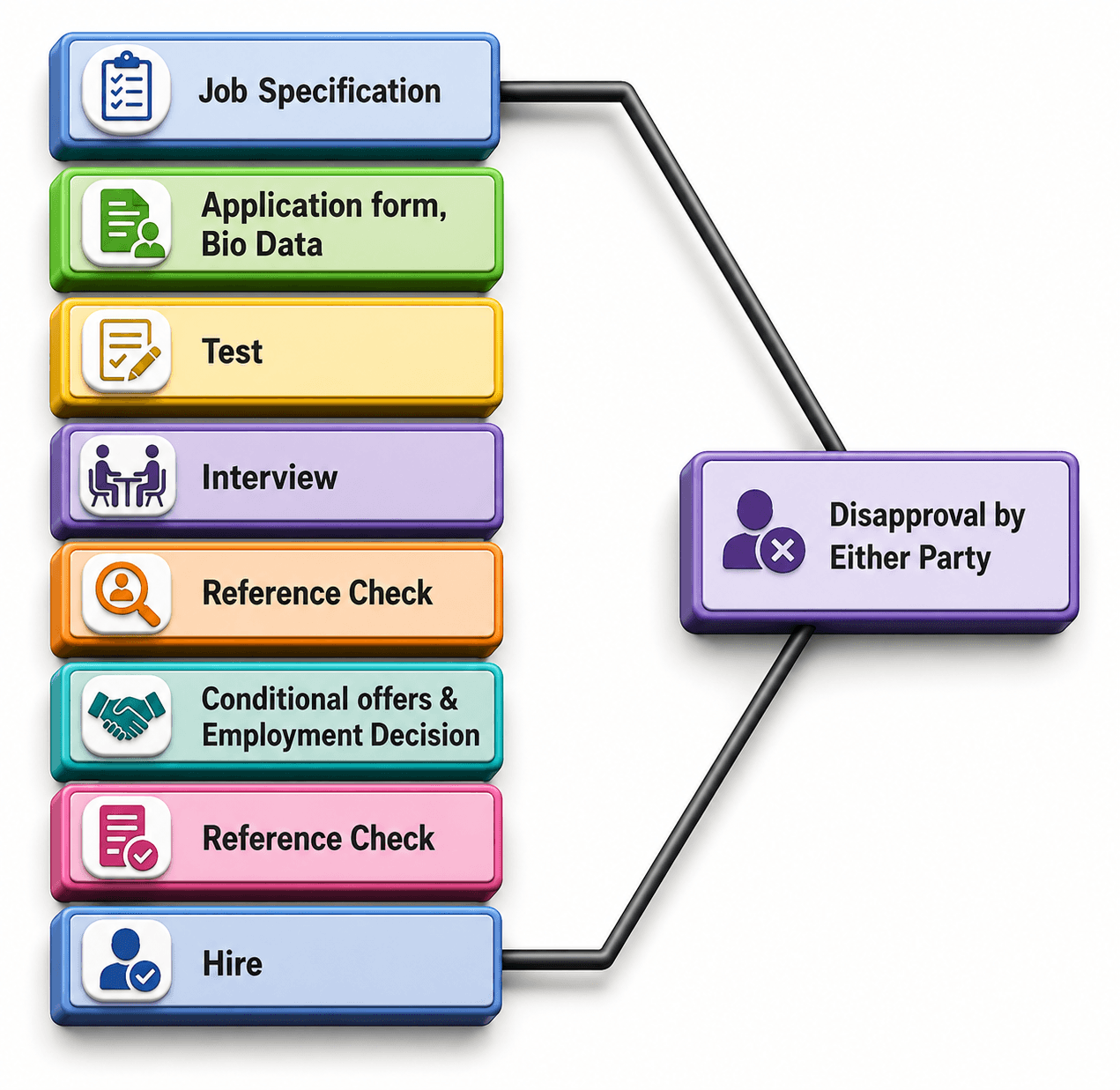
Even though every event is different and individual events are short lived, every event company requires permanent staff for managing the organization. Some examples of permanent staff requirement in specialized areas are venue manager, operations and logistic manager, light and sound engineer, catering manager, technology support officer, sponsorship manager, risk manager, event designer, and tourism event coordinator.
Checking the candidate’s suitability for the position is primarily done by two methods:
- Employing a person with basic education, who can be trained on the job to perform the role s/he is hired for. This method is mostly used to employ operational staff.
- Employing a person with relevant professional and educational background in event management or related field.
Performance Appraisal and Development: Output of an employee in a business is of paramount importance and is linked to the employee’s performance. Performance Appraisal is systematic evaluation of the performance of employees and to assess their potential for further growth and development. The advantages of conducting performance appraisal are given below:
- Based on the performance appraisal, the employer determines which employees are to be promoted, demoted or fired.
- The supervisors are able to frame training policies and programs.
- It helps to analyze strengths and weaknesses of employees to design new assignments for efficient employees.
- Ascertain the future development programs for the employees.
- Determine the compensation to be given to an employee.
- Better communication and greater motivation among employees.
Employee Compensation: Employee compensation is the payment made to workers in exchange for their labor. It is closely associated with employee satisfaction as well. This payment is often in cash, and at times may also be combined with various non-monetary benefits, such as health insurance / childcare, certain amount of paid vacation time each year. Many businesses and organizations structure their employee compensation policies to attract, retain, and motivate their employees.
A small enterprise unit should evolve a satisfactory employee compensation system by: (a) grading jobs; (b) formulating wage scales for each employee specification; (c) proposing effective means of encouraging and rewarding employees; and (d) providing for employment stability. Employee should be rewarded on merit for his work and loyalty.
Motivation: Motivation is derived from the word ‘motive’ which means need, desire, want or drive of an individual. Motivation stimulates, energizes and enables people to achieve goals, be it individual goals or organizational goals. Various factors that simulate people’s behavior at work can be desire for money, success, recognition, job-satisfaction, teamwork, etc. A fundamental component of the event manager’s skills is the ability to motivate her / his staff. Given below are the advantages of motivating employees at workplace.
- Employees work for the growth of the organization
- Improves level of efficiency of employees
- Leads to achievement of organizational goals
- Leads to stability of work force
- The more motivated the employees are, the more empowered the team is and more profitable and successful is the business.
- Motivation will lead to an optimistic and challenging attitude at workplace.
To motivate the employees, individual and team goals should be carefully linked to the performance. This can be achieved by recognizing good performance through verbal acknowledgement, monetary benefits, training and skill development, job enrichment, job rotation, media recognition, merchandise, tickets, post-event parties, recognition certificates, badges, memorabilia, etc.
Communication: It is well understood that the process of passing any information from one person to another with the aid of a medium is called communication. The process of communication involves the sender who sends information to the receiver who responds accordingly.
Here is an example. You (sender) might have an incomparable novel concept/ idea for organizing a world class concert. This idea (information) is passed on to fellow workers (receiver). ‘Effective’ communication is one of the basic requirements to run the event and also develop a positive attitude among employees. You may recall that in Communication Skills and Methods, we had discussed about communication skills of an event manager and communication requirements during events that employ different methods. Communication is essential for effective supervision, effective staffing, coordination and control as well as for industrial harmony and peace.
The lines of communication down the hierarchy and from side to side is necessary to ensure that information gets passed around the organization quickly and not restrict itself to hierarchical communication. For example, if there is a change in the dance program, the Entertainment Officer needs to first tell the Visitor Services Officer and should then be able to speak directly to the information and ticket office without waiting for other managers and officers / staff to turn up. Forms of communications – oral or written – should be specified with adequate clarity, flexibility and maximum participation at each level in order to enhance efficiency and productivity in the organization. These could employ the use of appropriate technology.
Besides effective communication within the organization, effective communication with external stakeholders is important. Also, the messages used to promote an event have a significant impact. This is because there is usually less scope for advertising by small EMCs to convince all market segments to attend. Hence, a combination of text and images require a lot of creative effort. For promotion brochures, posters, banners, radio / television advertising, and local BTL (below the line) activities can be used. Eye catching promotional strategies like usage of kiosks, banners and T-shirts can be used.
Total Quality Management (TQM)
Total Quality Management (TQM) is a management approach to long–term success through customer satisfaction. TQM can be summarized as a management system for a customer-focused organization that involves all employees towards continual improvement. There is no single path to achieve total quality within an organization because all organizations have their own culture, people, and technologies. What may work well for one company will not necessarily work for another. The guidelines given below can be customized according to the organization’s requirement.
Customer-focused: ‘Customer is God’ is the thumb rule to be followed. A customer ultimately determines the level of quality. What must also be understood is that the external customers are served by the internal customers (employees). Therefore, there is a need to focus on requirements and expectations of both internal and external customers.
Total Employee Involvement: All employees work towards common goals. Total employee commitment can be achieved if the management is able to provide an enabling work environment to its employees.
Process-centered: A process is a series of steps where inputs from suppliers (internal or external) are transformed into outputs that are delivered to customers (again, either internal or external). Steps necessary to carry out the process are defined, and performance measures are continuously monitored in order to detect unexpected variation.
Leadership Commitment: Leadership of an organization must be committed to continuous improvement. This commitment must be visible throughout all layers of management. If the management is committed to provide right tools and systems, employees are likely to excel at what they do.
Integrated System: TQM focuses on the interconnectivity between various departments. An integrated system ensures that all departments understand the vision, mission, and guiding principles as well as the quality policies, objectives, and critical processes of an organization. They work in coordination with each other to achieve business success.
Strategic and Systematic Approach: Strategic planning or strategic management includes formulation of the strategic plan integrating quality as a core component.
Continual Improvement: TQM is a continuous process of improvement. Continual improvement drives an organization to be both analytical and creative. This enables the organization to become more competitive and effective at meeting clients’ expectations.
Communications: During stages of organizational change, as well as part of day-to-day operation, effective communication plays an important role in maintaining morale and motivating employees at all levels. Communications involve strategies, methods and timeliness.
Training and Development: Through training, management assures that employees have necessary skills and technical knowledge to perform their jobs effectively. Many organizations have a definite staff development policy, progression routes and comprehensive staff training programs such as ‘Investors in People’ that target at enhancing quality of human resources for well-trained, well-motivated and well managed staff. This also leads to public recognition of the enterprise or company.
Recognition and Awards: After achieving a goal or successfully completing a difficult or important task, giving recognition encourages further participation by an employee and motivates others to perform.
Business Ethics
Values and ethics in simple words mean principle or code of conduct that governs transactions; in this case business transactions. Ethics try to create a sense of right and wrong in organizations and often when the law fails, it is the ethics that may stop organizations from harming the society or environment. Of course, all of us want businesses to be fair, clean and beneficial to the society. For that to happen, organizations need to abide by ethics or rule of law, engage themselves in fair practices and competition; all of which will benefit the consumer, the society and the organization.
Business ethics are important because of the following reasons:
- Satisfying Basic Human Needs: Being fair, honest and ethical is one of the basic human needs.
- Creating Credibility: An organization that is believed to be driven by moral values is respected in society. This perception is held far and wide even by those who are not involved with the organization.
- Uniting People and Leadership: Uniting workers within an organization goes a long way towards achievement of one common goal or mission.
- Improve Decision Making: All decisions are driven by values. For example, an organization that does not value its employees will not cater to the needs of its employees resulting in dissatisfaction.
- Long Term Gains: Organizations guided by ethics and values are profitable in the long run, though in the short run they may seem to lose money.
- Securing the Society: Often ethics succeed law in safeguarding the society. The law machinery is often found acting as a mute spectator in its endeavor to save the society and the environment.